
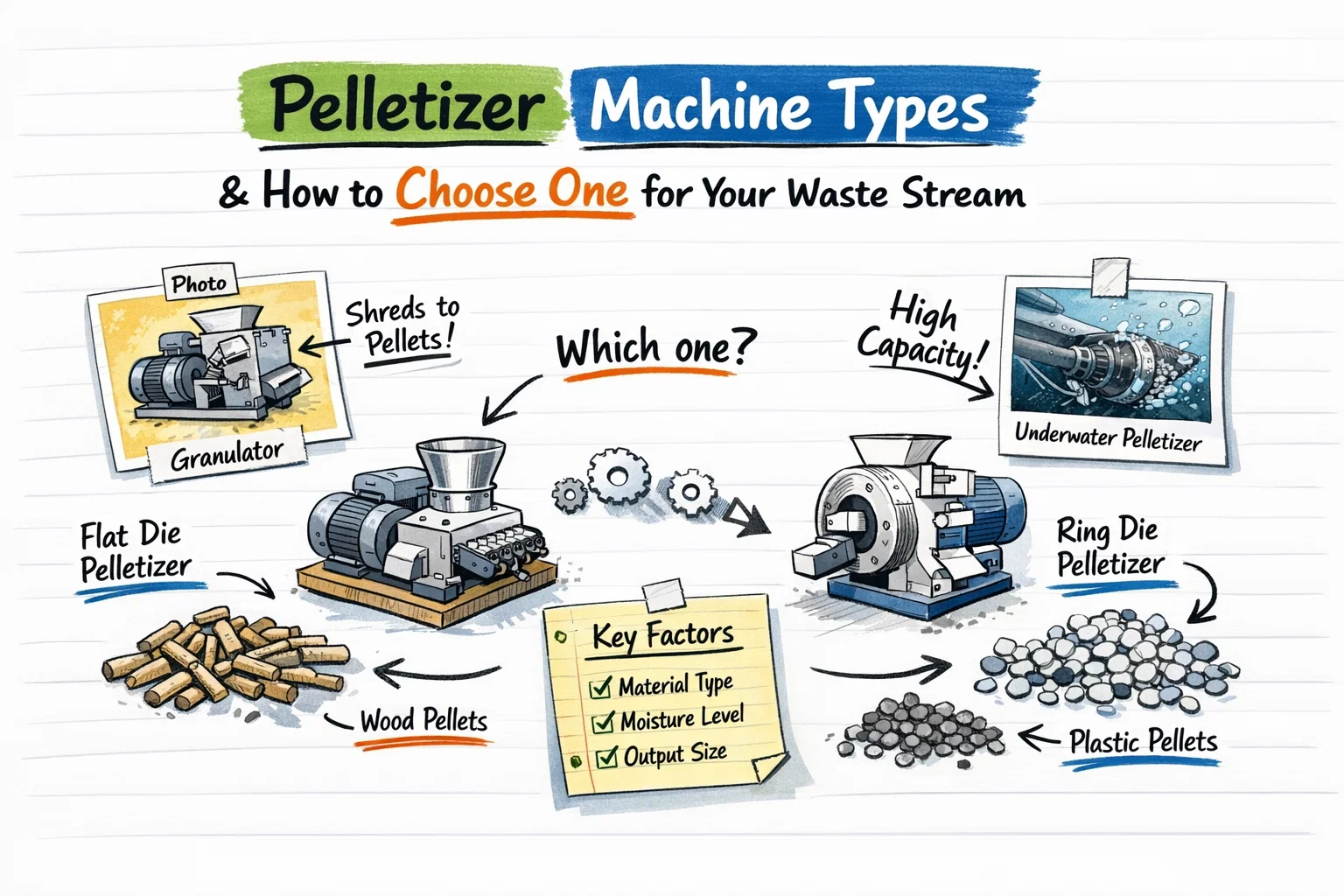
Tipos de granuladoras: La guía completa para elegir la adecuada
Invertir en el tipo incorrecto de granuladora es el error más común -y caro- que vemos en la industria del reciclado de plásticos. Puede que tenga un almacén lleno de valiosa película de LDPE, pero si la introduce en una extrusora estándar de un solo husillo diseñada para tubos rígidos, se enfrentará a sobrecargas constantes, un bajo rendimiento y gránulos degradados.
En Rumtoo, creemos que su flujo de residuos dicta su máquina, no al revés. Tanto si se trata de film post-industrial, HDPE rígido triturado o escamas de PET, la rentabilidad de su operación depende de la adaptación de la “forma” de sus residuos a la física de la extrusora.
Esta guía le ayudará a entender exactamente qué tecnología de granulación se ajusta a sus objetivos específicos de reciclado.
1. La alimentación: El factor “forma
Antes incluso de que el plástico llegue al tornillo, debe entrar en la máquina. Aquí es donde se producen 80% de problemas de procesamiento. La densidad de su material, ya sea film esponjoso o virutas pesadas, determina la tecnología de alimentación que necesita.
Para plásticos ligeros y blandos (películas, bolsas, rafia)
Si recicla películas de PE/PP, bolsas tejidas o materiales espumados, se enfrenta a un problema de densidad. Estos materiales son demasiado ligeros para caer en un tornillo de forma natural.
La Solución: Cortadora Compactadora Líneas Integradas
También conocido como sistema “3 en 1” (como nuestra serie ReadyMac), esta máquina combina un compactador de corte directamente con el tornillo extrusor.
- Cómo funciona: Una gran olla situada en la base de la máquina corta, seca y calienta por fricción el plástico hasta que se densifica. A continuación, la fuerza centrífuga empuja este material caliente y denso directamente hacia el tornillo de la extrusora.
- Por qué lo necesitas: Elimina la necesidad de un aglomerador independiente y garantiza que el sinfín esté siempre lleno, lo que evita la “sobrecarga” (producción desigual).
Para plásticos pesados y rígidos (corteza, escamas)
Si procesa botellas aplastadas, tuberías, cajas o residuos electrónicos de ABS, su material ya es lo suficientemente denso como para fluir por gravedad.
La solución: Sistemas de tolva o de alimentación forzada
Una tolva estándar suele funcionar para el triturado de flujo libre. Sin embargo, si se mezclan materiales ligeros y pesados, un alimentador de fuerza lateral ayuda a empujar el material hacia el tornillo para mantener un alto rendimiento.
2. El motor: extrusoras de un husillo frente a extrusoras de doble husillo
Una vez que el plástico está dentro, hay que fundirlo y presurizarlo. El debate entre husillos simples y dobles suele malinterpretarse.
Extrusora monohusillo (el caballo de batalla)
La gran mayoría de los trabajos de reciclado -especialmente para PE y PP- utilizan extrusoras monohusillo. Son excelentes para generar la alta presión necesaria para empujar el plástico sucio a través de finas rejillas de filtración. Son rentables, fáciles de mantener y energéticamente eficientes para materiales que no requieren mezclas complejas.
Extrusora de doble husillo (la mezcladora)
Los tornillos gemelos utilizan dos tornillos entrelazados. Generalmente se necesitan para:
- Compuesto: Añadir cargas (como carbonato cálcico) o fibras de refuerzo.
- Reciclaje de PET: El PET requiere un manejo cuidadoso de la humedad y la viscosidad (IV), que los husillos dobles gestionan mejor gracias a su capacidad superior de desgasificación al vacío.
- Materiales sensibles: Si necesita un control preciso de la temperatura para evitar la degradación.
Consejo Práctico: Para la mayoría de las plantas de lavado y reciclado postconsumo (PE/PP), un solo tornillo con una geometría especializada (relación L/D de 30:1 o superior) proporciona el mejor equilibrio entre rendimiento de la inversión y durabilidad.
3. El corte: Anillo de agua frente a granulado de filamentos
La forma de cortar el plástico determina la forma y la calidad del producto final. Esta elección depende en gran medida de la “resistencia a la fusión” del polímero.”
Anillo de agua (Die Face) Granulado
Es la norma del sector para el reciclado de PE y PP.
- Proceso: Las cuchillas cortan el plástico inmediatamente al salir del cabezal de la matriz, y los gránulos se lanzan instantáneamente a un anillo de agua de refrigeración.
- Mejor para: Polietileno (PE) y polipropileno (PP). Estos materiales pueden pegarse si no se enfrían rápidamente.
- Ventaja: Está muy automatizada. Incluso si una cuchilla se desafila, la máquina sigue funcionando. Es compacta y reduce los costes de mano de obra.
Pelletización de Hilos
Es el método tradicional de los “espaguetis”. Los hilos de plástico se pasan por un baño de agua y luego se cortan con un granulador.
- Mejor para: Plásticos técnicos (ABS, PC), PET y materiales de alto IMF (plásticos muy fluidos) que podrían mancharse en una troqueladora.
- Ventaja: Produce granulados muy cilíndricos de alta calidad que parecen material virgen.
- Desventaja: Los filamentos pueden romperse, lo que obliga al operario a volver a enhebrarlos manualmente. Requiere más espacio en el suelo para el baño de enfriamiento.
4. La matriz de decisión: Adecuación del material a la máquina
Para simplificar su decisión de compra, hemos relacionado los flujos de residuos más comunes con la configuración ideal de la máquina que encontrará en nuestro página de productos.
| Flujo de residuos Alimentación recomendada Tipo de tornillo Método de granulación
| - | - | - | - |
| Películas PE/PP (Lavado) | Cortador Compactador | Tornillo Simple | Anillo de Agua |
| HDPE/PP rígido (Botellas, Tubos) | Tolva / Alimentador forzado | Tornillo simple | Varilla o anillo de agua |
| Copos de PET (Botellas) | Alimentador de fuerza + Cristalizador | Tornillo doble | Filamento |
| PVC (Blando o Rígido) | Tolva | Cónico Doble / Simple | Cara de matriz (Refrigerado por aire) |
| Compuesto (Añadiendo rellenos) | Alimentador lateral | Tornillo doble | Filamento |
5. Factores críticos más allá de la hoja de especificaciones
Cuando compare fabricantes, mire más allá del tamaño del motor. La eficiencia de una línea de reciclado suele venir determinada por dos sistemas “ocultos”: La filtración y la desgasificación.
Filtración (cambiadores de filtros)
Los residuos postconsumo están sucios. Si utiliza un cambiador de cribas manual, su operario detendrá la máquina cada 30 minutos para cambiar las cribas, lo que acabará con su eficiencia.
Busque cambiadores de cribas continuos de doble pistón o filtros láser. Permiten que la máquina siga funcionando mientras la criba se limpia sola o mientras se cambia un pistón. Este funcionamiento ininterrumpido es vital para la rentabilidad.
Desgasificación (ventilación)
La humedad es el enemigo. La tinta y el agua se convierten en gas dentro de la extrusora, creando gránulos porosos y “espumosos” que los compradores rechazan.
Asegúrese de que su máquina dispone de zonas de desgasificación al vacío de alta eficacia. Para películas muy impresas, una sistema de doble ventilación suele ser necesario para eliminar el elevado volumen de volátiles liberados durante la fusión.
Resumen
Elegir el granulador adecuado no consiste en encontrar la máquina más barata; se trata de encontrar la máquina que pueda hacer frente a los peores días de su material (contaminación, humedad) al tiempo que ofrece una producción constante.
Si está procesando película, el Compactador con Cortador es su mejor amigo. Si está manipulando reafilado rígido, un robusto Monotornillo con un buen cambiador de pantallas le servirá durante décadas.
Si desea conocer más a fondo las especificaciones concretas de la maquinaria y ver estos sistemas en acción, visite Rumtoo Maquinaria de reciclaje. Configuramos las líneas en función de su material de muestra específico para garantizar que no haya sorpresas en la instalación.