Plastic Pelletizing Machine: Key to Efficient Recycling

If you’re evaluating plastic recycling equipment or exploring ways to enhance your production efficiency, understanding the plastic pelletizing machine is essential. This technology transforms plastic waste and raw materials into uniform, high-quality pellets—the building blocks of nearly every plastic product you encounter daily. More than just machinery, pelletizers are your gateway to profitability, sustainability, and competitive advantage in the modern plastics industry.

What Is a Plastic Pelletizing Machine?

A plastic pelletizing machine is precision-engineered equipment that converts raw plastic materials or recycled plastic waste into small, uniform pellets (also called granules). These pellets serve as the standardized feedstock for manufacturing thousands of plastic products across virtually every industry.

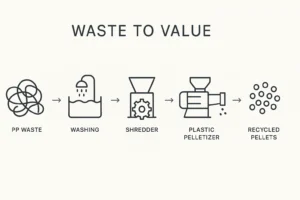
The process integrates multiple stages—melting, filtration, extrusion, cutting, and cooling—into one continuous, highly efficient operation. The result? Consistent, high-quality pellets that meet exact specifications for density, size, and purity.

How Does the Pelletizing Process Work?

Understanding the pelletizing workflow helps you appreciate the sophistication and value this equipment brings to your operation:

1. Material Feeding

Plastic waste or raw materials enter the system through an automated feeding mechanism. Modern systems handle diverse forms—from rigid flakes to soft films—without manual sorting.

2. Melting & Homogenization

A precision-controlled extruder melts the plastic to exact temperature specifications. Advanced screw designs ensure uniform melt consistency, critical for pellet quality.

3. Filtration

Integrated melt filters remove contaminants—from paper labels to metal particles—protecting downstream equipment and ensuring pellet purity.

4. Extrusion & Cutting

Molten plastic extrudes through precisely sized die holes. Rotating blades cut the extrudate into uniform pellets at the die face or after strand cooling, depending on your system type.

5. Cooling & Drying

Pellets cool rapidly in water baths or air-cooled conveyors, solidifying their shape and stabilizing their properties for storage and transport.

Types of Plastic Pelletizing Systems: Choosing Your Best Fit

Different applications demand different technologies. Here’s how the three primary pelletizing systems compare:

Strand Pelletizers

Best for: Medium-scale operations processing thermoplastics with moderate contamination levels

How it works: Extruded plastic strands cool on a water bath conveyor before entering a rotary cutter that produces cylindrical pellets.

Advantages:

  • Lower initial investment
  • Simple operation and maintenance
  • Excellent for clean materials like PET, HDPE, and PP
  • Reliable performance for consistent materials

Underwater Pelletizers

Best for: High-volume production requiring premium pellet quality

How it works: Rotating blades cut molten plastic directly at the die face underwater. Water immediately cools and transports pellets, creating smooth, spherical shapes.

Advantages:

  • Highest throughput rates (up to 12,000 kg/h)
  • Superior pellet uniformity and aesthetics
  • Minimal dust generation
  • Ideal for food-grade and medical applications

Water Ring Pelletizers

Best for: Processing heat-sensitive materials and achieving high output

How it works: High-speed blades cut pellets at the die face within a water-filled chamber. A water ring surrounds the cutting area for immediate cooling.

Advantages:

  • Gentle processing protects temperature-sensitive polymers
  • Faster cooling than air systems
  • Compact footprint for space-constrained facilities
  • Energy-efficient operation

For comprehensive guidance on selecting the right system for your specific materials and throughput requirements, explore our complete range of plastic pelletizing solutions.

Applications: Where Your Pellets Go

The pellets you produce power manufacturing across dozens of industries:

Packaging Industry

Plastic bags, food containers, protective wraps, bottles, and caps—packaging consumes over 40% of global plastic pellet production.

Automotive Sector

Dashboards, bumpers, interior trim panels, under-hood components, and structural parts demand high-performance engineered pellets.

Construction Materials

Piping systems, window profiles, insulation panels, flooring, and roofing materials rely on pelletized feedstock for consistent quality.

Consumer Goods

Toys, appliances, electronics housings, furniture, and sporting goods all begin as plastic pellets.

Textile Industry

Synthetic fibers for clothing, carpets, and industrial fabrics start with specialized pellet formulations.

Why Invest in a Plastic Pelletizing Machine? Key Benefits

Transform Waste into Revenue

Rather than paying disposal fees for plastic scrap, convert it into valuable pellets. Recycled plastic pellets command premium prices—particularly food-grade and engineering-grade materials—creating new profit centers from former waste streams.

Achieve Exceptional Pelletizing Efficiency

Modern pelletizing systems achieve conversion rates exceeding 98%, with minimal material loss. Automated controls maintain consistent output quality, reducing rejects and maximizing your material yield.

Process Virtually Any Plastic Type

Today’s advanced pelletizers handle an impressive range of materials:

  • PET (polyethylene terephthalate) – bottles, packaging
  • HDPE (high-density polyethylene) – containers, pipes
  • LDPE (low-density polyethylene) – films, bags
  • PP (polypropylene) – automotive parts, textiles
  • PVC (polyvinyl chloride) – construction materials
  • PS (polystyrene) – packaging, insulation
  • Engineering plastics – PC, PA, ABS for specialized applications

Maximize Energy Efficiency

Latest-generation pelletizing systems consume as little as 0.12 kWh per kilogram processed—up to 30% less than older technologies. Lower energy consumption directly reduces operating costs and your carbon footprint.

Ensure Production Consistency

Automated process controls maintain precise parameters for temperature, pressure, and cutting speed. This consistency delivers uniform pellet quality batch after batch, meeting the strict specifications your customers demand.

Minimize Maintenance Requirements

Modern pelletizers feature quick-access components, tool-free blade replacement, and self-cleaning filter systems. This design philosophy minimizes downtime and keeps your operation running profitably.

How to Choose the Right Plastic Pelletizing Machine

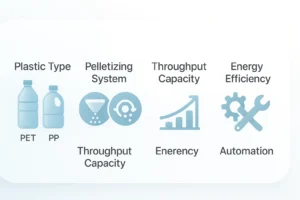
Selecting the optimal pelletizer requires evaluating multiple factors specific to your operation:

Material Characteristics

What are you processing?

  • Rigid plastics (bottles, containers) vs. soft plastics (films, bags)
  • Contamination levels (clean industrial scrap vs. post-consumer waste)
  • Moisture content and required drying
  • Material melt temperature and sensitivity

Production Requirements

What’s your target output?

  • Required throughput (kg/h) for current and future capacity
  • Batch processing vs. continuous operation
  • Multiple material types or dedicated single-material runs

Pellet Specifications

What do your customers need?

  • Pellet size and shape (cylindrical vs. spherical)
  • Density and bulk properties
  • Quality standards (food-grade, medical-grade, engineering-grade)
  • Color consistency requirements

Operational Considerations

What matters to your facility?

  • Available floor space and layout constraints
  • Power supply specifications (voltage, phase)
  • Cooling water availability and quality
  • Operator skill levels and training availability
  • Maintenance capabilities and parts availability

Budget & ROI

What’s your investment framework?

  • Initial capital investment vs. long-term operating costs
  • Energy consumption and utility costs
  • Maintenance requirements and parts replacement cycles
  • Expected payback period from waste reduction and pellet sales

Frequently Asked Questions

What does a plastic pelletizing machine do?

A pelletizing machine converts raw plastic materials or recycled plastic waste into uniform, high-quality pellets. These pellets serve as standardized feedstock for manufacturing virtually all plastic products, from packaging to automotive components. The machine integrates melting, filtering, extruding, cutting, and cooling into one continuous process.

How do you pelletize plastic effectively?

Effective pelletizing requires precise control of multiple parameters: plastic is first melted at optimal temperatures, filtered to remove contaminants, extruded through sized die holes, cut into uniform pieces by rotating blades, and rapidly cooled to stabilize shape and properties. Modern systems automate these steps, maintaining consistency and maximizing quality.

What is pelletized plastic used for?

Pelletized plastic serves as the universal feedstock for plastic manufacturing across all industries. Major applications include packaging materials (bags, containers, films), automotive parts (dashboards, trim, structural components), construction materials (pipes, profiles, insulation), consumer goods (appliances, toys, electronics), and textile fibers. Pellets standardize material properties and simplify handling, storage, and transportation.

What industries depend on plastic pellets?

Virtually every industry using plastic depends on pellets: packaging (the largest consumer), automotive manufacturing, construction, consumer electronics, medical devices, textiles and apparel, agriculture (films and containers), and aerospace (engineering plastics). The pellet format provides the consistency, quality, and handling convenience these industries require.

How long does a pelletizing machine last?

With proper maintenance, industrial pelletizing machines operate reliably for 15-25 years or longer. Key factors affecting lifespan include build quality, operating conditions, maintenance practices, and material processed. High-quality systems with robust construction and regular preventive maintenance deliver decades of productive service, making them sound long-term investments.

Can I process contaminated or mixed plastics?

Yes, but system selection matters critically. Basic strand pelletizers handle clean, pre-sorted materials. Advanced systems with sophisticated filtration, degassing, and twin-screw technology successfully process heavily contaminated post-consumer waste, mixed plastics, and materials with significant moisture or volatiles. Your material characteristics determine the appropriate technology level.

Your Path Forward: Investing in Pelletizing Technology

The plastic pelletizing machine represents more than equipment—it’s your strategic investment in operational efficiency, sustainability, and competitive positioning. Whether you’re recycling post-consumer waste, reprocessing industrial scrap, or compounding specialized materials, the right pelletizing system transforms your capabilities and profitability.

Modern pelletizing technology delivers remarkable versatility, processing everything from clean PET bottles to heavily contaminated mixed films with consistent, high-quality results. Energy efficiency improvements reduce operating costs while environmental benefits strengthen your market position and meet evolving regulatory requirements.

As the plastics industry continues its evolution toward circular economy principles, pelletizing capability positions your operation at the center of this transformation—converting waste into value, reducing environmental impact, and meeting the growing demand for high-quality recycled materials.

Ready to explore how pelletizing technology fits your specific operation? Our technical team brings decades of experience matching equipment capabilities to processing requirements, helping you select and configure the optimal solution for your materials, throughput, and quality objectives.

The Ultimate Guide to Thermal Drying Machines in Plastic Recycling

If you operate a plastic recycling facility, you understand that material quality directly impacts your bottom line. After washing and dewatering plastics like PET bottles or LDPE film, one critical step separates premium-grade pellets from inferior products: achieving ultra-low moisture content.

This is where a thermal drying machine becomes indispensable. This comprehensive guide explains how this essential equipment works and why it’s your key to producing high-value recycled plastics.

Why Thermal Drying Is Non-Negotiable: The Moisture Challenge

After mechanical dewatering, plastic flakes and film retain 5-15% residual moisture. This seemingly small amount creates significant problems during pelletizing:

Poor Quality Pellets: Trapped moisture vaporizes in the extruder, creating bubbles and voids that weaken pellet structure and compromise consistency.

Production Instability: Excess moisture causes processing fluctuations, resulting in downtime and reduced throughput.

Lower Market Value: Inconsistent, low-quality pellets command significantly lower prices, directly impacting your profitability.

A thermal drying machine solves this problem definitively, reducing moisture content to below 3%—the industry standard for producing pure, dense pellets ready for high-value applications.

How Thermal Drying Technology Works

Our thermal drying system functions as a precision-engineered hot air system designed specifically for plastic materials. The process combines simplicity with remarkable effectiveness:

  1. Material Inlet & Conveyance Washed and dewatered plastic enters the system and moves through an extended network of stainless steel pipes.
  2. Hot Air Injection & Tumbling A high-capacity blower propels hot air at controlled velocity through the pipes. As plastic tumbles through the system, every surface receives optimal heat exposure, causing rapid moisture evaporation.
  3. Cyclone Separation & Purification The material stream enters a cyclone separator, where centrifugal force separates dry plastic from lighter contaminants like dust and fines, while cooler air helps condense any remaining moisture.

Key Advantages of Our High-Performance Drying System

Achieve Premium Quality Standards

Consistently reach moisture levels below 3%—and below 1% with sequential configurations—to produce top-grade recycled pellets that command premium pricing.

Enhance Material Purity

The integrated cyclone separator actively removes contaminants such as dust, labels, and fine particles, significantly improving final product purity.

Maximize Production Efficiency

Properly dried material flows smoothly through extruders, minimizing processing issues and downtime while maximizing throughput and operational efficiency.

Ensure Consistent Performance

Our systems deliver reliable, repeatable results batch after batch, giving you the consistency buyers demand and you need for predictable operations.

Technical Specifications & Custom Configurations

We recognize that every recycling operation has unique requirements. Our thermal dryers are available in multiple configurations. Here’s our popular RSJ800 model:

  • Blower Power: 5.5 KW (Delivers strong, consistent airflow)
  • Heating Power: 36 KW (Provides rapid, stable heat)
  • Pipe Diameter: 159 mm (Optimized for excellent material flow)
  • Material: Type 304 Stainless Steel (Corrosion-resistant, food-grade quality)
  • Certification: CE Certified (Meets international safety and quality standards)

Scaling for Higher Capacity: For larger operations or materials requiring ultra-low moisture levels, we offer more powerful models and can design systems with multiple thermal heaters in sequence to meet any throughput requirement.

For specialized applications, thermal dryers can be configured as standalone units or integrated seamlessly into complete washing lines.

Frequently Asked Questions

What distinguishes dewatering from thermal drying?

Dewatering uses mechanical force (typically centrifugal) to remove bulk surface water, typically achieving 5-15% moisture content. Thermal drying employs heated air to evaporate stubborn residual moisture to below 3%. These processes are complementary: dewatering removes the majority of water quickly and economically, while thermal drying delivers the final precision needed for premium pellet production.

What final moisture level will I achieve?

Our standard thermal drying systems consistently achieve less than 3% moisture content. For applications requiring even lower levels (below 1%), such as food-grade rPET production, we configure multiple drying units in series to meet your exact specifications.

Which plastic types can this machine handle?

Our thermal dryers process a wide range of washed plastic materials effectively:

  • Rigid plastic flakes (PET, HDPE, PP)
  • Soft plastic films (LDPE, LLDPE, PP film)
  • PP woven bags and similar materials

How does the cyclone separator enhance quality?

The cyclone separator provides crucial purification. As material and air swirl inside the chamber, centrifugal force separates particles by weight and density. Heavier, dry plastic flakes fall to the collection point, while lighter contaminants—dust, label fragments, and fine particles—exit with the air stream for separate collection. This dual-function design delivers both drying and cleaning in one efficient step.

Do you offer customized solutions?

Absolutely. We understand that standard solutions rarely meet every operation’s needs. We customize heating power, pipe configuration, system dimensions, and capacity based on your material type, required throughput (kg/hr), and target moisture specifications. Our engineering team works directly with you to design the optimal solution for your facility.

How to Recycle Polypropylene Bags and Nonwovens: A Comprehensive Guide

Polypropylene (PP) bags, commonly found in various industries, are known for their durability, lightweight nature, and resistance to moisture. These bags, including woven bags and bulk bags, play a significant role in packaging and transportation. However, as the use of PP bags increases, so does the environmental concern related to their disposal. In this article, we’ll dive deep into how to recycle polypropylene bags effectively, from collection to pelletization, and explore ways to minimize their environmental impact.

Read more

What is Plastic Pelletizing? The Ultimate Guide to Waste Recycling | Rumtoo Machine

Waste to Pellets Transformation

Plastic pelletizing is the critical final step in the plastic recycling process, transforming cleaned and shredded plastic waste into uniform, high-value pellets. If your business is grappling with how to handle plastic scrap, reduce operational costs, or improve production efficiency, understanding this process is not just beneficial—it’s essential. In a world facing unprecedented challenges from …

Read more

What is plastic centrifugal dryer ?

In any high-volume plastic recycling operation, water is both a necessary tool and a significant problem. While washing lines are essential for cleaning contaminants from plastic flakes and films, the residual moisture can severely compromise the quality of the final product and drive up operational costs. This is where a centrifugal dryer dewatering machine becomes …

Read more

What is Densifying? A Guide to PP/PE Film Recycling

What is Densifying? A Guide to PP/PE Film Recycling

The Game-Changer in Plastic Film Recycling: What is Densifying and Why You Need It If you’re in the plastics recycling business, you know the struggle: PP/PE film is light, fluffy, and often wet. It clogs machinery, costs a fortune to transport, and makes producing high-quality pellets a constant challenge. But what if there was a …

Read more

What is BOPP Film and Where Is It Used?

Rolls of BOPP Film

What is BOPP Film and Where Is It Used? Biaxially Oriented Polypropylene (BOPP) Film BOPP is a versatile packaging material created by stretching polypropylene film in both machine and transverse directions. This process enhances its physical properties, making it a preferred choice for flexible packaging. Key Features & Applications: High Clarity & Gloss: Ideal for …

Read more

What Is EPS Recycling? A Complete Guide for Sustainable & Profitable Operations

What Is EPS Recycling

If your facility handles large quantities of packaged goods, you are familiar with the bulky, white foam material used for cushioning and insulation. This material, expanded polystyrene (EPS), is essential for protecting products during transit. However, its disposal presents a significant operational and financial challenge. This guide explains the EPS recycling process and shows how …

Read more

Four Reasons to Start Recycling In-House Plastic Waste

A Manufacturer’s Guide to In-House Plastic Recycling Machines An in-house plastic recycling machine is a strategic asset that transforms your production waste from a liability into a valuable resource. For plastic manufacturers dealing with volatile raw material prices and increasing environmental regulations, processing post-industrial scrap on-site is no longer a niche practice but a core …

Read more

Innovative Applications of Pelletizing Systems in Automotive Plastics Recycling: From Scrap Parts to High-Performance Pellets

Innovative Applications of Pelletizing Systems in Automotive Plastics Recycling: From Scrap Parts to High-Performance Pellets

Introduction: Driving the Future of Automotive Recycling The automotive industry is undergoing a monumental shift towards sustainability, driven by regulatory pressures and a growing consumer demand for eco-friendly vehicles. As cars become more advanced, the volume and complexity of the plastics they contain also increase, with the average vehicle today incorporating roughly 200kg of plastics …

Read more