
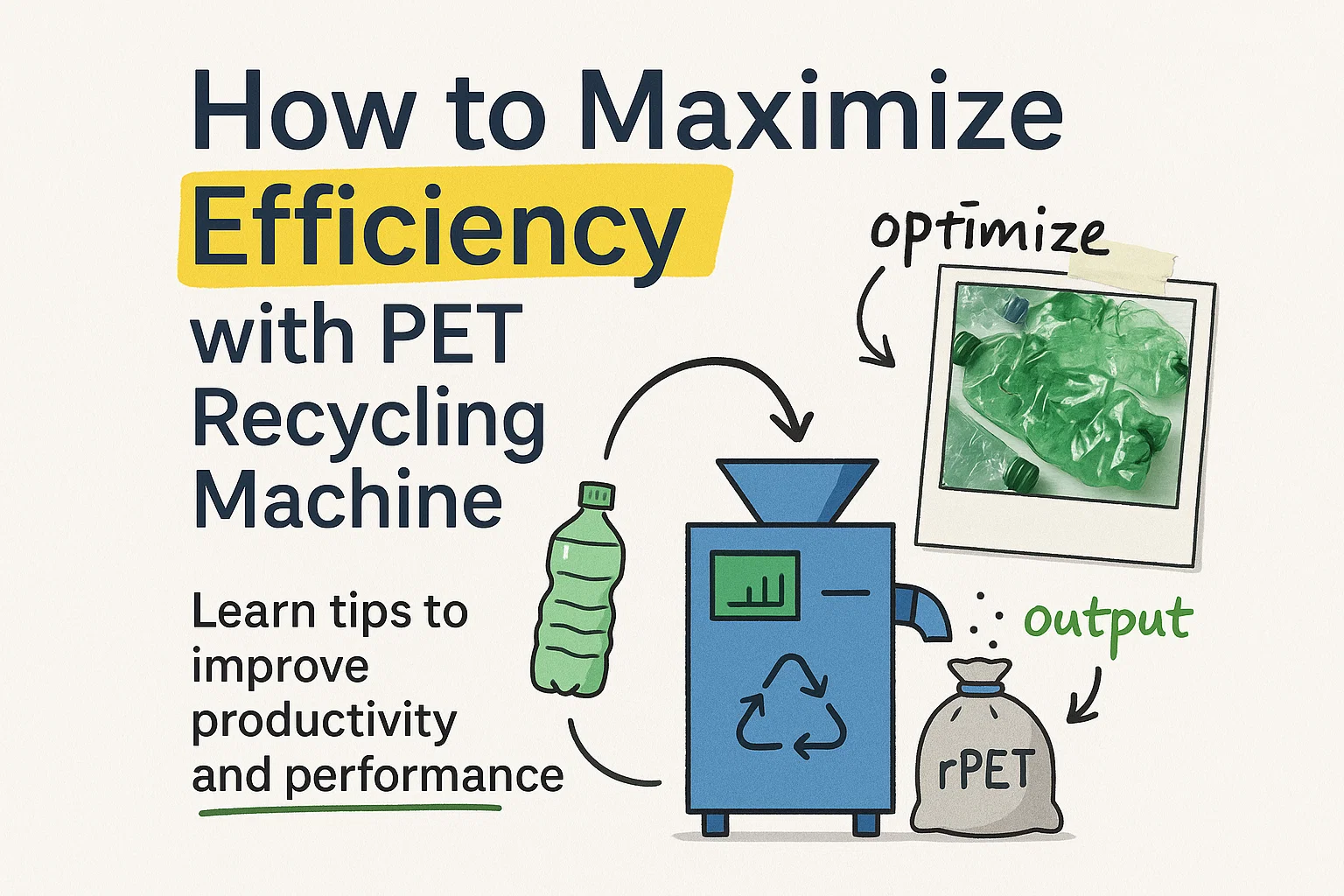
Maximizing the efficiency of PET (polyethylene terephthalate) recycling plays a vital role in reducing environmental impact and boosting operational productivity. Adopting the right strategies ensures both environmental sustainability and economic profitability. Here are some key considerations to help optimize your PET recycling operations:
1. Select the Right Machinery
The foundation of efficient PET recycling lies in selecting the appropriate machine for your operation. Here’s what to consider:
- Capacity Requirements: Ensure that the PET recycling machine matches your expected production volumes. Overestimating or underestimating capacity can result in wasted resources or operational bottlenecks.
- Input Quality: Understand the quality of the PET materials you’ll be processing. Clean PET ensures a higher-quality output, reducing the need for additional steps during processing.
- Output Specifications: Define the required form and quality of the recycled PET. Whether you’re producing food-grade plastic or industrial-grade material, the machine must be designed to meet your specific output goals.
- Technological Features: Look for machines that offer advanced sorting, washing, and decontamination capabilities. These features are essential for removing contaminants and ensuring the final product meets required standards.
- Cost Considerations: Consider both the initial investment and long-term operational costs. While advanced technology might have a higher upfront cost, it could result in long-term savings through efficiency and reduced downtime.
For instance, RUMTOO’s PET Bottle-to-Bottle System offers a comprehensive solution, including food-grade PET production lines, highlighting the importance of investing in technology that matches your recycling objectives. Explore our high-efficiency PET Bottle Flakes Pelletizer for further insight.
2. Implement Advanced Sorting and Cleaning
Proper sorting and cleaning are key to achieving high-quality recycled PET. Consider these steps:
- Automated Sorting Systems: Leveraging technologies like near-infrared (NIR) spectroscopy and optical sorting can significantly improve the accuracy of separating PET from other materials, ensuring only clean PET enters the recycling process.
- Comprehensive Washing Processes: Incorporating both hot and cold washing stages, along with friction washers and drying units, will effectively remove labels, adhesives, and other contaminants. These are critical for ensuring that the recycled PET meets the purity requirements.
Rumtoo offers integrated washing and decontamination systems, designed to produce food-grade PET flakes ideal for use in new containers. This level of thorough cleaning guarantees the highest quality recycled material.
3. Optimize Process Parameters
Efficient operations are heavily influenced by fine-tuning key parameters during the recycling process:
- Temperature Control: Maintaining precise temperature control during extrusion and pelletizing is essential for consistent product quality. Deviations in temperature can lead to inconsistent melting and product defects.
- Vacuum Levels: Adjust vacuum settings in decontamination units to effectively remove contaminants and moisture. This improves the overall quality of the final product.
- Residence Time: The duration materials remain in reactors significantly affects the intrinsic viscosity (IV) of the recycled PET. Properly controlling residence time ensures that the PET meets the required physical properties for its intended use.
For example, NGR’s P:REACT system uses Liquid State Polycondensation (LSP) to efficiently convert PET waste into food-grade material, demonstrating how controlling these parameters can streamline the recycling process.
4. Regular Maintenance and Employee Training
To ensure sustained efficiency, regular maintenance and a well-trained workforce are critical:
- Scheduled Maintenance: Conduct routine checks and preventive maintenance to avoid unexpected downtime. Proactively replacing worn-out parts or cleaning critical components can prevent costly repairs.
- Employee Training: Train staff on machine operation, troubleshooting, and safety procedures. This ensures smooth operations and helps maintain consistent output, while reducing the risk of accidents or operational delays.
5. Stay Informed on Technological Advancements
The PET recycling industry continues to evolve, with new technologies emerging that can further enhance efficiency:
- Biocatalytic Depolymerization: Enzyme-based recycling methods offer the potential for more sustainable recycling processes. Research into these technologies could pave the way for more efficient PET depolymerization.
- Innovative Recycling Systems: Companies like Rumtoo are constantly innovating, with the EC process being one such development that optimizes recycling by enhancing the quality and efficiency of PET recycling.
Staying ahead of the curve by adopting emerging technologies will ensure your operations remain competitive and environmentally responsible.
Conclusion
By integrating these strategies into your PET recycling processes, you can significantly enhance both efficiency and sustainability. Investing in the right machinery, adopting advanced sorting and cleaning technologies, optimizing operational parameters, and maintaining your equipment are essential steps in improving the effectiveness of your recycling operations. For more details on how Rumtoo’s solutions can help you maximize efficiency, visit our Plastic Bottle Recycling page.