
In today’s industrial landscape, plastic waste is no longer just “trash”—it is a valuable resource waiting to be reclaimed. However, modern plastic products are increasingly complex, varying wildly in layers, print coverage, density, and formulation.
For recycling plant managers and procurement specialists, the challenge isn’t just buying a machine; it is engineering a solution. Whether you are processing flexible films or rigid HDPE pipes, selecting the precise waste recycling equipment—including the right feeding, degassing, filtration, and pelletizing systems—is the single most important factor in determining your profitability and operational efficiency.
At Rumtoo, we believe the first step to high-quality pellets is accurate material identification. Below is your six-step guide to assessing your waste stream and configuring the ultimate recycling line.
The 6-Step Guide to Identifying Waste and Selecting Your Pelletizer
Before you invest in machinery, you must audit your material. By answering the following six questions, you help our engineering team design a solution tailored to your specific production goals.
1. What is the Polymer Type? (Material Composition)
Examples: HDPE, LDPE, LLDPE, PP, ABS, PS, etc.
The “DNA” of your plastic dictates the machine design. Different polymers possess distinct Melt Flow Indices (MFI) and viscosities, which directly influence the choice of die face and pelletizing method.
- Standard Materials: Most standard polymers function well with water-ring pelletizing systems.
- High Flow Materials: For polymers with an MFI of 30 or higher, we recommend a Strand Pelletizing System to ensure uniform pellet shape and prevent agglomeration.
2. What are the Shape and Size of the Waste?
Examples: Roll film, loose bags, woven sacks, pre-crushed regrind, or uncrushed rigid pipes.
The physical form of the waste determines how we feed the machine and what pre-conditioning is required.
- Films & Soft Plastics: Light, airy materials like LDPE film or woven bags require an integrated Compacting and Cutting System. This densifies the material, generating friction heat to pre-condition the plastic for the extruder.
- Rigid & Hard Plastics: Heavy materials, such as HDPE pipes or lumps, require robust reduction. Rumtoo specializes in this area, offering solutions like the Single-Shaft Shredder for Extruder Head Waste or our Heavy Duty HDPE Plastic Pipe Shredder System. These ensure hard materials are reduced to the correct size before entering the extrusion process.
3. What is the Source and Condition of the Material?
Examples: Clean post-industrial scrap (piranha), washed post-consumer waste, or dirty field waste.
Moisture and contamination are the enemies of quality pellets.
- Clean/Dry Waste: Can be processed directly with standard filtration.
- Dirty/Washed Waste: If you are processing post-consumer waste, it must be washed and dried. However, residual moisture and deep contamination require a machine equipped with a high-torque gearbox, specialized filtration devices, and efficient venting to prevent defects in the final granule.
4. What is the Percentage of Ink or Print Coverage?
Examples: <10% (minimal), 30-50% (medium), or >90% (heavily printed).
Ink burns. When melted, the solvents and chemicals in ink turn into gas. If trapped, this gas creates porous, weak “popcorn” pellets.
- Low Print: Standard venting is sufficient.
- Heavy Print: For highly printed surface films, Rumtoo engineers highly efficient Degassing Systems. We can configure single, double, or triple venting zones to vacuum out volatiles and ink vapors, ensuring solid, high-density pellets even from heavily printed waste.
5. What is Your Required Throughput?
Examples: 100 kg/hr, 500 kg/hr, or 1000+ kg/hr.
Efficiency is a numbers game. We size the extruder diameter and motor power based on your target hourly output.
- Pro Tip: Always plan for growth. Purchasing a machine with slightly higher capacity than currently needed is often more economical (ROI) than pushing a smaller machine to its breaking point or buying a second line just two years later.
6. Visualization: The Power of a Photo
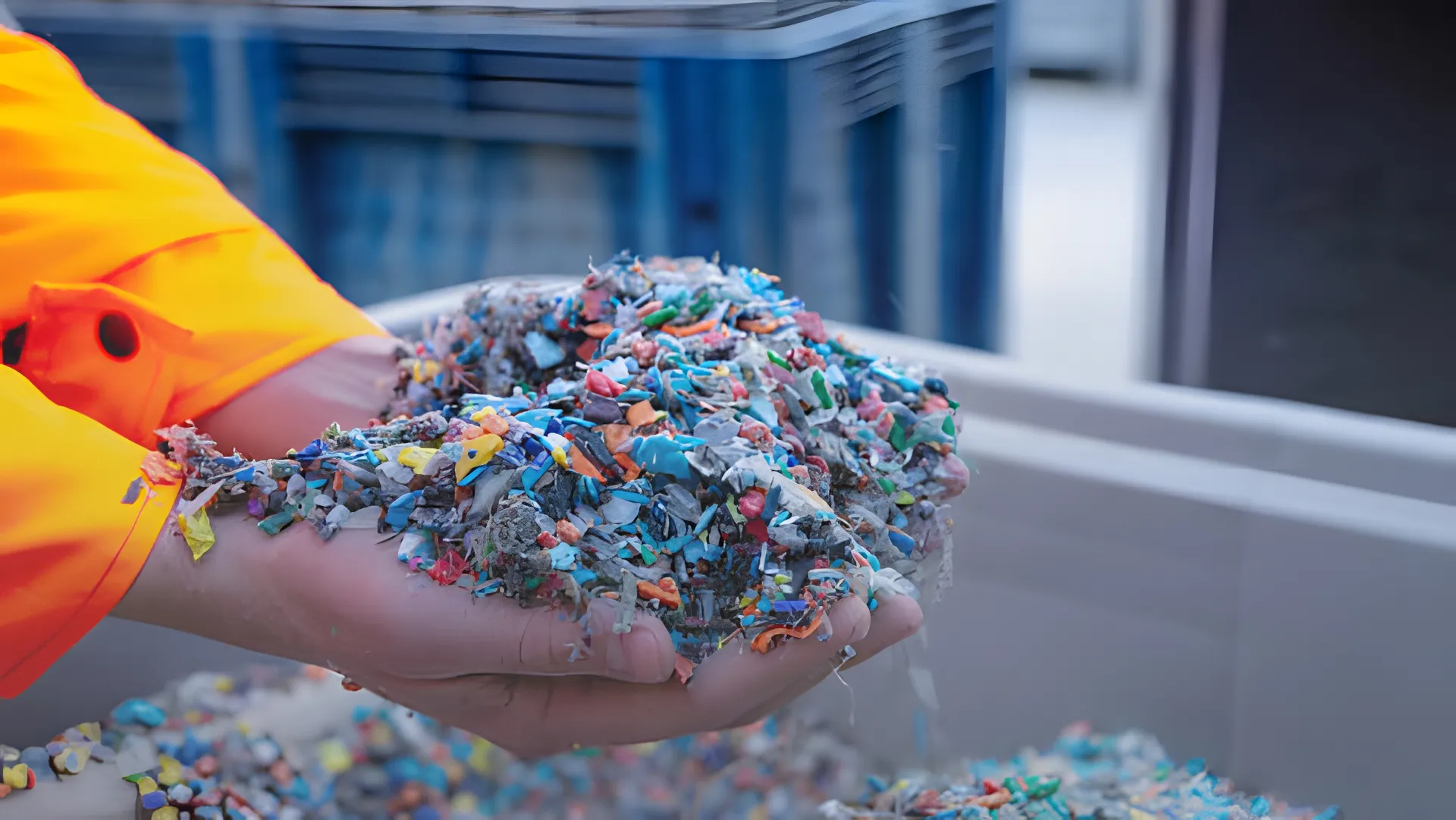
Descriptions are helpful, but visuals are definitive. Providing Rumtoo with photos or videos of your scrap allows our engineers to instantly spot potential feeding challenges or contamination issues that technical data sheets might miss.
Handling Mixed Inventory: Flexibility is Key
Do you handle multiple material types? Many recyclers worry they need a different machine for every plastic type.
Rumtoo’s solution is flexibility.
While it is ideal to dedicate lines to specific material streams for maximum efficiency, our machines are engineered for versatility. Our Integrated Shredder and Granulator Machines and customizable screw designs can handle a mix of film, raffia, and rigid regrind with adjustments to the feeding method.
- Strategy: If you have high volumes of two distinct materials (e.g., Soft Film vs. Hard Pipe), investing in two specialized, smaller lines is often more efficient than one massive “hybrid” line.
Upgrade Your Plant Performance
Already have a line but need better quality? You don’t always need a whole new system. Rumtoo offers standalone high-performance components to upgrade your existing setup:
- Shredding: Upgrade to a Shear Type Double Shaft Shredder for difficult, bulky items.
- Granulation: Add a Rigid Plastics Shredder to refine your material prep.
- Layout: We design flexible equipment layouts to fit tight factory spaces without compromising maintenance access.
Conclusion: Take the Guesswork Out of Recycling
Selecting the right waste recycling equipment is a balance of science and engineering. By understanding your specific material properties—type, shape, condition, and print coverage—you ensure your investment delivers high-quality pellets and rapid ROI.
Ready to build your ideal recycling line?
Don’t guess. Let the experts at Rumtoo configure the machine for you.
Contact Our Sales Engineering Team
Fill out the form below with your material details, and we will provide a technical recommendation and quote within 24 hours.
Request a Technical Consultation
Copy and paste your answers into our contact form for a fast assessment.
| Category | Description | Your Answer |
| (1) Polymer Type | HDPE, LDPE, PP, ABS, BOPP, etc. | |
| (2) Shape & Size | Roll film, loose bags, rigid pipe, lumps | |
| (3) Condition | Clean factory scrap vs. Washed post-consumer | |
| (4) Ink Coverage | % of surface area printed | |
| (5) Target Output | kg/hour required | |
| (6) Photos Available? | Yes/No |